Mtn View Nissan of Cleveland

Blog / New Inventory

2026 Nissan Pathfinder: Trims, Pricing, and Family Capability

2026 Nissan Pathfinder: Trims, Pricing, and Family Capability
The 2026 Nissan Pathfinder is the right three-row SUV for families who need genuine towing muscle alongside everyday practicality. The Rock Creek 4WD leads the lineup with 295 hp and 270 lb-ft of torque, while every trim capable of towing a trailer hitches up to 6,000 lbs on the Platinum and Rock Creek configurations. Seven trim choices — starting at $39,990 MSRP for the SV 2WD — let buyers match budget, drivetrain, and feature level precisely.

Table of Contents

How Much Does the 2026 Nissan Pathfinder Cost to Own for Cleveland Families?

The 2026 Nissan Pathfinder in Cleveland spans seven trims from $39,990 for the SV 2WD to $51,790 for the Platinum 4WD, with a destination charge of $1,575 applied to every configuration. That range puts this three-row SUV within reach of Cleveland's dual-income households while still offering a fully loaded option for buyers who want every feature.
Feature Platinum 2WD Platinum 4WD Rock Creek 4WD SL 2WD SL 4WD SV 2WD SV 4WD
Base MSRP $49,790 $51,790 $45,090 $42,590 $44,590 $39,990 $41,990
Every trim adds the same $1,575 destination charge. The gap between a front-wheel-drive and all-wheel-drive version of the same trim runs roughly $2,000 — the SV 2WD at $39,990 versus the SV 4WD at $41,990, and the SL 2WD at $42,590 versus the SL 4WD at $44,590. The Rock Creek 4WD sits at $45,090 and is the only trim to bring a different engine tune, making it a meaningful value for buyers prioritizing off-pavement capability.
For families working through a purchase budget, browsing our current new Pathfinder inventory at Mtn View Nissan of Cleveland is the fastest way to see which trims are in stock and what current pricing looks like before making a trip to the dealership. Fuel costs are also part of the ownership picture: the SV 2WD and SL 2WD both return an EPA-estimated 23 combined MPG, the best in the lineup, while all-wheel-drive trims on the standard engine rate 22 combined MPG. The Rock Creek 4WD, running on premium fuel with its higher-output engine, is rated at 21 combined MPG.

Rugged Style That Matches Cleveland's Appalachian Hills and Urban Landscape

The 2026 Pathfinder in Cleveland wears a look that reads equally at home downtown near the Historic District and on a gravel approach to a trailhead in the surrounding mountains. Its five-door body measures 197.7 inches long and 77.9 inches wide on the standard trims, while the Rock Creek 4WD stretches slightly to 198.8 inches due to its front skid plate and off-road-oriented bumper treatment. Height on the standard trims is 70.9 inches; the Rock Creek stands 73.7 inches tall, reflecting its lifted suspension tuning.
Across all trims, the Pathfinder rides on full LED lighting front and rear — projector-beam LED low and high beams with automatic high-beam control, LED daytime running lights, and LED rear lamps. Painted bumpers front and rear, chrome window surrounds, and chrome-finish roof rails give the standard trims a polished appearance. The Rock Creek 4WD swaps chrome rails for black-finish rails and adds fixed cross bars as standard equipment, giving it a more purposeful stance that fits the terrain around Cherokee National Forest.
Paint choices include standard solid finishes and optional pearl paint, with a two-tone roof option available on both Platinum trim levels. Wheels are 20-inch alloys on Platinum and SL Premium Package configurations, and 18-inch alloys on base SL and SV trims. The Rock Creek runs 18-inch alloys wrapped in all-terrain tires rather than the all-season rubber found on every other trim — a meaningful distinction for anyone who ventures beyond paved roads.
Shoppers who want to compare the Pathfinder's exterior against other options can also browse our pre-owned SUV inventory at Mtn View Nissan of Cleveland for additional choices in this segment.

Power and Handling for Weekend Adventures

The 2026 Pathfinder carries a single engine family across all seven trims — a 3.5L V6 paired with a 9-speed automatic transmission — but the Rock Creek 4WD receives a distinct tune that raises output to 295 hp and 270 lb-ft of torque, while the remaining six trims produce 284 hp and 259 lb-ft. The Rock Creek also requires premium fuel, while all other trims run on regular unleaded.
Feature Platinum 2WD Platinum 4WD Rock Creek 4WD SL 2WD SL 4WD SV 2WD SV 4WD
Horsepower 284 hp 284 hp 295 hp 284 hp 284 hp 284 hp 284 hp
Torque 259 lb-ft 259 lb-ft 270 lb-ft 259 lb-ft 259 lb-ft 259 lb-ft 259 lb-ft
Drivetrain Front-wheel drive All-wheel drive All-wheel drive Front-wheel drive All-wheel drive Front-wheel drive All-wheel drive
All four-wheel-drive trims use Nissan's All-Mode 4x4-i system, which operates in full-time, part-time, and automatic modes. The driver can select the appropriate setting manually or let the system distribute torque automatically — useful when transitioning between Cleveland's paved streets and the gravel fire roads that thread through the Appalachian ridges to the east. Descent control is also included on the AWD trims, adding confidence on steep, loose terrain.
The suspension architecture is consistent across the lineup: independent front struts with coil springs, and a multi-link independent rear with coil springs. The Rock Creek 4WD adds an alternate suspension tune calibrated for greater wheel travel and ground clearance — 7.7 inches unladen versus 7.1 inches on the standard trims. Approach angle on the Rock Creek is 18.8 degrees and departure angle is 22.8 degrees, compared to 15.6 degrees and 20.9 degrees on all other trims.
If you're currently driving a vehicle and considering a trade toward a Pathfinder, you can find out what your current vehicle is worth before visiting the showroom — a quick step that makes the buying conversation more straightforward.

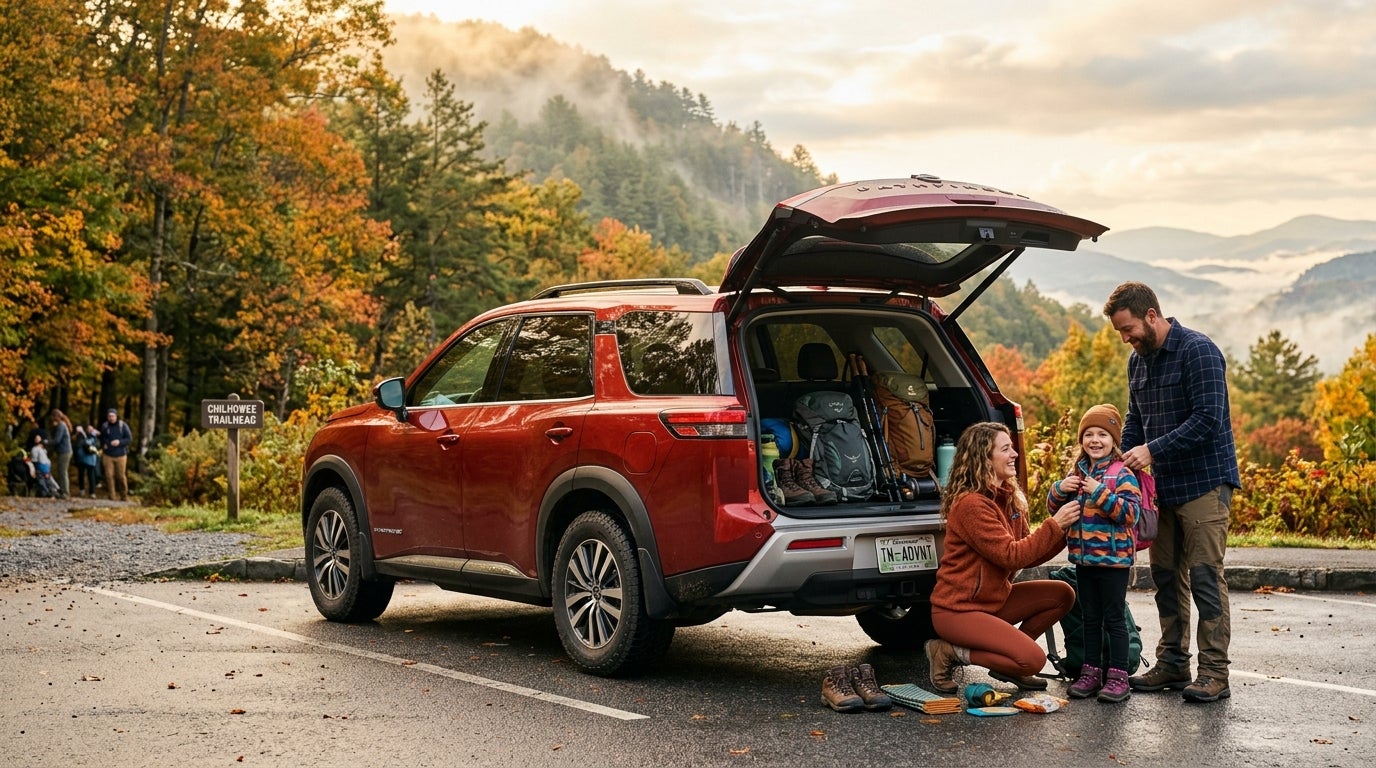
Spacious Comfort for Family Days at Parks and Forest Trips

Seven of the eight seats in the standard Pathfinder configuration can be filled by adults on a trip to Cherokee National Forest without anyone feeling squeezed. Front headroom measures 41.1 inches on the standard trims and 42.3 inches on the SL, SV, and Rock Creek trims, while second-row headroom is 38.4 inches (standard) or 39.6 inches (SL/SV/Rock Creek). Third-row headroom is 36.5 inches on Platinum trims and 37.8 inches on the others.
Feature Platinum 2WD Platinum 4WD Rock Creek 4WD SL 2WD SL 4WD SV 2WD SV 4WD
Seating 8 8 7 8 8 8 8
Curb weight 4,489 lbs 4,625 lbs 4,605 lbs 4,359 lbs 4,506 lbs 4,348 lbs 4,495 lbs
Towing 6,000 lbs 6,000 lbs 6,000 lbs 3,500 lbs 3,500 lbs 3,500 lbs 3,500 lbs
Payload 1,574 lbs 1,438 lbs 1,458 lbs 1,704 lbs 1,557 lbs 1,715 lbs 1,568 lbs
All trims share about 17 cu ft of cargo space behind the third row — enough for a full set of hiking packs or two large duffel bags — and fold to about 80.5 cu ft with the rear seats down. The standard second-row configuration is a split-bench seating for three, which keeps the 8-passenger count. The optional Platinum Captain's Chairs Package on the Platinum trims, and the standard captain's chair layout on the Rock Creek, convert the second row to two individual seats, dropping total capacity to 7 but improving access to the third row.
Front seats on all trims are power-adjustable buckets with heated surfaces and lumbar support. The Platinum trims add memory positions for the driver's seat. A three-zone automatic climate control system is standard across the lineup, with rear seat ventilation outlets ensuring passengers in every row stay comfortable on a long drive through the valley.
Families who want to get a head start on financing before visiting the dealership can submit a credit application online and arrive with a clearer picture of their purchasing power.

Connected Drives from School Runs to River Rafting

Every 2026 Nissan Pathfinder trim ships with wireless Apple CarPlay and wireless Android Auto as standard features — no cable required, which matters when kids are piling in for a school run and nobody wants to hunt for a cord. The infotainment system centers on a 12.3-inch touchscreen paired with a 12.3-inch digital instrument cluster, and a head-up display projects key driving information onto the windshield.
Navigation is built into all trims via internal hard drive storage with satellite view capability and live traffic information. The system supports over-the-air software updates through NissanConnect Services, which connects via an embedded SIM card. Remote services accessible through the NissanConnect app include remote start, remote lock and unlock, vehicle locate, geo-fencing alerts, speed alerts, and vehicle diagnostics — all useful for parents monitoring a new teen driver.
Charging is covered throughout the cabin: two USB ports in the front row, two in the second row, and either one or two in the third row depending on trim. A wireless charging pad is standard on the SL and Platinum trims and available as part of the Rock Creek Premium Package. A 12-volt outlet is in the cargo area, and a household-style power outlet is available on select configurations.
Audio on the SV and base SL trims is a 6-speaker system. Stepping up to the SL Premium Package, the Rock Creek Premium Package, or either Platinum trim brings a Bose® 13-speaker system with subwoofer — a notable upgrade for anyone who spends significant time on the road. A three-month satellite radio trial is included across all trims.
For genuine Nissan accessories and technology add-ons, our parts department at Mtn View Nissan of Cleveland can source and install OEM components specific to your trim.

Confidence on Cleveland's Urban Streets and Appalachian Country Roads

The 2026 Pathfinder carries a comprehensive suite of driver assistance technology across all trim levels — not just at the top of the range. Standard on every configuration is Automatic Emergency Braking (AEB) with Pedestrian Detection, which activates from as low as 3 mph and operates across a wide speed range including highway speeds. That coverage matters whether you're navigating school zones or merging onto a busy arterial.
Lane departure is managed by Intelligent Lane Intervention, which applies gentle steering correction when the vehicle begins to drift without a turn signal. Blind Spot Warning (BSW) monitors adjacent lanes and alerts the driver via mirror indicators, with the system active even without a turn signal input. Rear cross-traffic alert uses radar to detect approaching vehicles when reversing — helpful in crowded parking situations.
The Intelligent Cruise Control (ICC) system includes stop-and-go functionality, meaning it can bring the vehicle to a complete stop in traffic and resume without driver input. This is paired with highway assist and traffic jam assist, classifying the system as Level 2 partial automation.
Parking is supported by the Intelligent Around View Monitor (I-AVM) on SL and higher trims, which stitches together camera feeds from all four sides of the vehicle into a bird's-eye composite view. The standard SV trim uses an Around View Monitor for front and rear camera guidance. Front and rear sensors complement the camera systems on all trims.
Structural protection is provided by 10 airbags across all trims — dual front airbags, front center airbag, front and rear side airbags, and side curtain airbags covering all three rows. LATCH anchor points are included for child seat installation, and the IIHS has rated the LATCH system as Good. All-wheel disc brakes with ABS, electronic brake-force distribution, brake assist, and hill start assist are standard.

2026 Nissan Pathfinder Trim Pricing Breakdown

The seven-trim lineup divides into three clear tiers based on feature content and drivetrain availability, and understanding where each tier begins helps buyers avoid paying for features they don't need — or missing upgrades that are worth the step.
The SV 2WD at $39,990 and SV 4WD at $41,990 represent the entry point. Both include the 12.3-inch touchscreen, wireless smartphone integration, Intelligent Cruise Control (ICC) with stop-and-go, the full AEB and lane-keeping suite, Around View Monitor, 8-passenger seating, three-zone climate control, and 18-inch alloy wheels. The SV trims use a 6-speaker audio system and standard synthetic leather upholstery. Towing capacity on both SV trims is 3,500 lbs.
The SL 2WD at $42,590 and SL 4WD at $44,590 add the navigation system, wireless charging pad, heated front and second-row seats, and a power liftgate with hands-free release. The SL Premium Package — available on both SL trims — upgrades wheels to 20-inch alloys, adds the Bose® 13-speaker system, a panoramic sunroof, and unlocks the 6,000-lb towing capacity. SL trims use TailorFit synthetic leather upholstery in Charcoal or Light Gray.
The Rock Creek 4WD at $45,090 is the performance and off-road variant. It is the only trim with the 295-hp / 270 lb-ft engine tune, all-terrain tires, lifted suspension, black roof rails with fixed cross bars, and standard captain's chair seating for 7. The Rock Creek Premium Package adds a panoramic sunroof, heated second-row captain's chairs, wireless charging, and a heated steering wheel.
The Platinum 2WD at $49,790 and Platinum 4WD at $51,790 are the fully equipped trims. Both include the Bose® 13-speaker audio, panoramic sunroof, head-up display, ambient interior lighting, memory driver's seat, stainless steel door sill protectors, premium leather upholstery in Chestnut or Charcoal, and the Intelligent Around View Monitor (I-AVM) as standard. The optional Platinum Captain's Chairs Package converts the second row to individual captain's chairs, reducing seating to 7 but adding a 2+2+3 configuration.

Warranty, Maintenance, and Service Options

Nissan backs the 2026 Pathfinder with a 3-year / 36,000-mile basic warranty, a 5-year / 60,000-mile powertrain warranty, and a 5-year anti-corrosion warranty. Roadside assistance coverage matches the basic warranty at 3 years / 36,000 miles. Paint coverage is also provided for 3 years / 36,000 miles.
The powertrain coverage is particularly relevant for a vehicle used for towing and off-road driving — knowing the engine, transmission, and drivetrain components are protected for five years gives owners confidence when using the Pathfinder for its full capability range. The All-Mode 4x4-i system on AWD trims falls within that powertrain coverage.
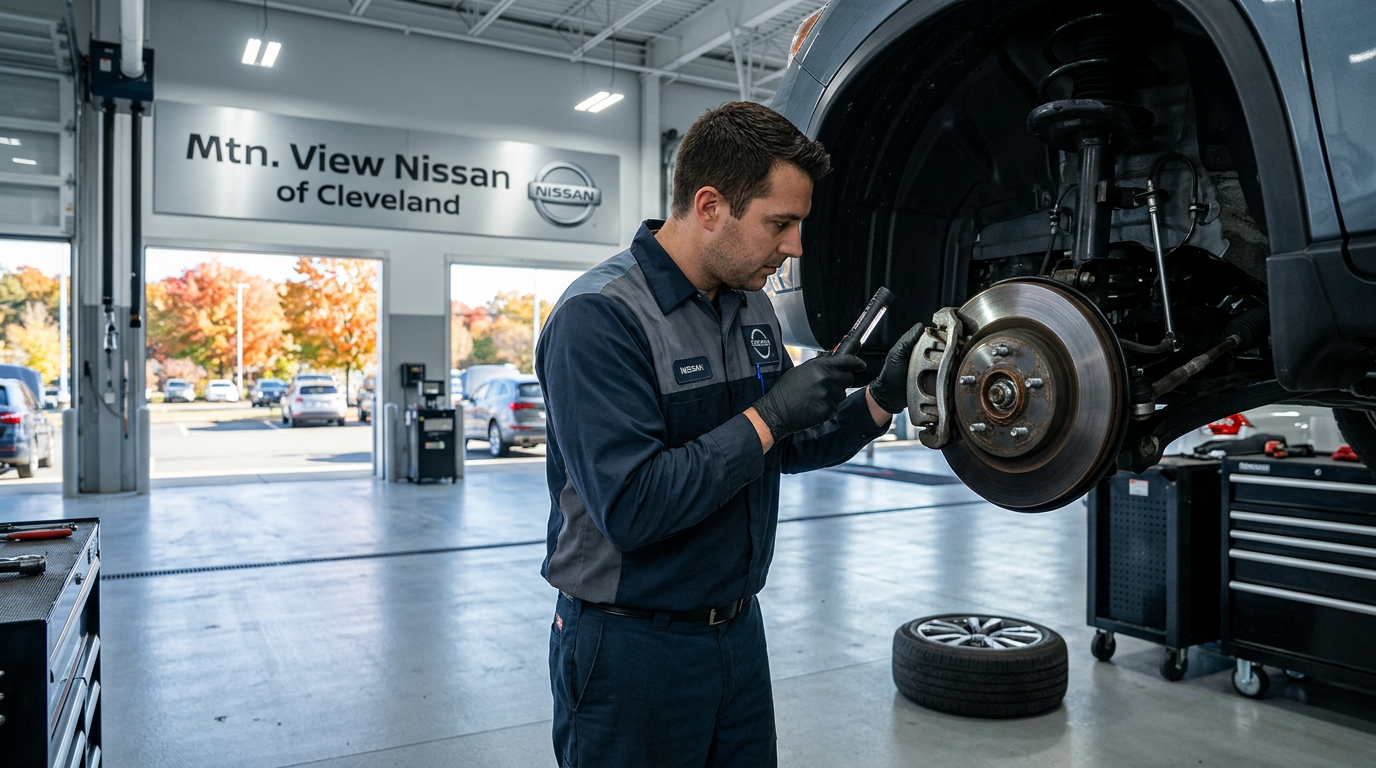
For buyers who prefer a pre-owned option with added peace of mind, Mtn View Nissan of Cleveland also carries certified pre-owned Nissan vehicles that come with their own warranty and inspection standards. When it's time for scheduled maintenance — oil changes, tire rotations, brake inspections, or anything else — you can book a service appointment directly through our service department. Having a local dealership familiar with your vehicle's history simplifies maintenance and keeps warranty coverage intact throughout the coverage period.

Awards and Expert Recognition Highlighting the 2026 Nissan Pathfinder's Strengths

Third-party validation matters when a purchase of this size is on the table. The 2026 Nissan Pathfinder has earned an IIHS Top Safety Pick designation, with Good ratings in the moderate overlap front test, small overlap front driver test, and side impact test. The LATCH child seat anchor system is rated Good by IIHS, and headlights are rated Acceptable. NHTSA awarded the Pathfinder an overall 5-star safety rating, with a 5-star side impact score, 4-star frontal crash score, and 4-star rollover rating.
Beyond crash testing, Nissan has publicly highlighted the 2026 Pathfinder as a top choice for teen drivers in recognition from both IIHS and Consumer Reports — a credibility signal that resonates with parents. According to Car and Driver, the Pathfinder's cabin space and feature accessibility make it a practical choice in the competitive three-row segment. Edmunds has noted the model's strong value proposition relative to rivals such as the Toyota Highlander, Honda Pilot, and Kia Telluride, pointing to the breadth of standard safety technology as a differentiator. The combination of independent third-party ratings and manufacturer recognition gives buyers a well-rounded picture of where the Pathfinder stands in its class.

Fuel Economy

Fuel economy and range by trim
Feature Platinum 2WD Platinum 4WD Rock Creek 4WD SL 2WD SL 4WD SV 2WD SV 4WD
-- -- -- -- -- -- -- --
MPG 21 city / 27 hwy / 23 combined 20 city / 25 hwy / 22 combined 20 city / 23 hwy / 21 combined 21 city / 27 hwy / 23 combined 21 city / 26 hwy / 23 combined 21 city / 27 hwy / 23 combined 21 city / 26 hwy / 23 combined

Frequently Asked Questions from Families Considering the 2026 Nissan Pathfinder

Q: What is the towing capacity of the 2026 Nissan Pathfinder, and which trims support it?

The Platinum 2WD, Platinum 4WD, and Rock Creek 4WD all support a maximum towing capacity of 6,000 lbs. The SL 2WD, SL 4WD, SV 2WD, and SV 4WD trims have a towing capacity of 3,500 lbs in their base configuration, though the SL Premium Package upgrades the SL trims to 6,000 lbs. Buyers who plan to tow a boat or camper to the Ocoee River should confirm their trim's towing package status before purchase.

Q: Does the Rock Creek 4WD have a different engine than other Pathfinder trims?

Yes. The Rock Creek 4WD is the only 2026 Pathfinder trim with a different engine calibration. It produces 295 hp and 270 lb-ft of torque from the same 3.5L V6, compared to 284 hp and 259 lb-ft on all other trims. It also requires premium fuel rather than the regular unleaded used by the rest of the lineup. In exchange, it adds all-terrain tires, lifted suspension, and a 7.7-inch ground clearance versus 7.1 inches on standard trims.

Q: What is the fuel economy of the 2026 Nissan Pathfinder?

Fuel economy varies by drivetrain. The SV 2WD, SL 2WD, and Platinum 2WD all return 21 city / 27 highway / 23 combined MPG. The SL 4WD rates 21 city / 26 highway / 23 combined MPG, while the Platinum 4WD and SV 4WD rate 20 city / 25 highway / 22 combined MPG. The Rock Creek 4WD, with its higher-output engine and all-terrain tires, returns 20 city / 23 highway / 21 combined MPG.

Q: How many passengers does the 2026 Pathfinder seat?

Six of the seven trims seat 8 passengers in the standard bench-seat configuration. The Rock Creek 4WD seats 7 as standard, because it comes with captain's chairs in the second row rather than a bench. The Platinum trims also offer an optional captain's chairs package that converts them to 7-passenger seating. All configurations include a three-person third-row bench.

Q: Where can I test drive or buy the 2026 Nissan Pathfinder near Cleveland?

Mtn View Nissan of Cleveland is located at 131 Pleasant Grove Rd, Mcdonald, TN 37353. To check current Pathfinder availability or ask a specific question about a trim before making the drive, reach our team at (423) 790-3700. Our staff can walk you through the differences between the SV, SL, Rock Creek, and Platinum configurations in person and help you identify the right fit for your family's driving needs.

© 2026 Mtn View Nissan of Cleveland. All rights reserved.
Posted in:

Recommended Posts

What Is the Recommended Factory Maintenance Schedule for a Nissan?

What Is the Recommended Factory Maintenance Schedule for a Nissan?

Nissan factory scheduled maintenance generally requires routine service every 5,000 to 7,500 miles or six months for synthetic oil changes and tire rotations, alongside major system inspections at 15,000-mile, 30,000-mile, and 60,000-mile milestones. Exact service timing depends on the vehicle model, engine type, and whether driving patterns fall under standard or severe operating conditions. NISSAN FACTORY MAINTENANCE SCHEDULE Interval Core Services & Inspections 5,000 - 7,500 Mi. Synthetic Oil & Filter Change, Tire Rotation 15,000 Miles Cabin Filter, Brake System & Line Inspection 30,000 Miles Engine Air Filter, Brake Fluid, Drive Belts 60,000 Miles Spark Plugs, Transmission Fluid Diagnostic Adhering to the manufacturer maintenance timeline keeps critical engine, brake, and drivetrain components performing properly throughout vehicle ownership. Every Nissan vehicle includes a specific maintenance log inside its factory owner manual outlining exact intervals. Following these service intervals prevents unexpected mechanical breakdowns, maintains optimal fuel efficiency, and preserves coverage under factory warranty agreements. Driving habits significantly influence service frequency. Nissan divides maintenance schedules into two primary categories: standard service and severe service. Standard schedules apply to highway cruising and steady commuting under moderate climate conditions. Severe service schedules apply to vehicles frequently driven on short trips under 5 miles, operating in extreme heat or cold, idling for extended periods, driving on dusty unpaved roads, or hauling heavy cargo. Drivers in Cleveland navigating the elevation changes near the Appalachian Ridge and surrounding mountain routes frequently benefit from the severe maintenance schedule to keep severe wear at bay. When you need maintenance support, getting directions to our service center ensures your vehicle receives dedicated factory-level care. You can also give our service advisors a call directly at (423) 790-3700 to review your owner manual interval recommendations. Table of Contents How Often Does a Nissan Need an Oil Change and Tire Rotation? What Services Are Included in Nissan Factory Scheduled Maintenance? What Are the Signs That a Nissan CVT Fluid Change or Inspection Is Needed? How Long Is the Nissan Factory Powertrain and Bumper-to-Bumper Warranty? Are Prepaid Nissan Maintenance Plans Available to Lock In Service Costs? Frequently Asked Questions About Nissan Maintenance and Repair Keep Your Nissan Running Performance-Ready How Often Does a Nissan Need an Oil Change and Tire Rotation? The 7,500-mile oil change interval for Nissan vehicles using full synthetic oil balances engine protection with maintenance cost efficiency. Engine oil lubricates internal moving components, reduces friction, and carries away operational heat. Over time, thermal breakdown and particulate contamination reduce the oil's ability to protect vital internal engine parts. Replacing the oil filter during every oil change removes trapped engine deposits and ensures clean fluid circulates continuously through the engine block. Rotating your tires at every oil change promotes even tread wear across all four positions. Front-wheel-drive and all-wheel-drive configurations place different mechanical forces on front and rear tires during acceleration, braking, and cornering. Regular tire rotations extend overall tire life, preserve balanced handling, and protect sensitive drive components from uneven rolling resistance. Our factory-certified technicians inspect tire tread depth and check brake pad thickness during every routine visit. Drivers can simplify their vehicle maintenance care by booking a routine service appointment online to keep their maintenance log completely up to date. What Services Are Included in Nissan Factory Scheduled Maintenance? Nissan factory scheduled maintenance includes engine oil and filter changes, tire rotations, cabin microfilter updates, engine air filter replacements, fluid checks, and detailed multi-point safety inspections. Factory scheduled maintenance builds systematically over time to address wear-and-tear components before performance degrades. Routine service packages expand at specific mileage thresholds: 15,000-Mile Service: Includes engine oil and filter change, tire rotation, in-cabin microfilter replacement, and comprehensive inspection of brake pads, rotors, lines, steering gear, driveshaft boots, and exhaust systems. 30,000-Mile Service: Encompasses all 15,000-mile maintenance items plus engine air filter replacement, brake fluid inspection or replacement, and drivetrain fluid evaluations. 60,000-Mile Service: Combines intermediate maintenance checks with engine drive belt inspections, spark plug inspection or replacement, and advanced transmission fluid diagnostics. 90,000-Mile Service: Repeats comprehensive 30,000-mile service tasks alongside cooling system flushes, engine timing inspections, and suspension component wear assessments. Multi-point inspections completed during factory scheduled visits allow certified technicians to check battery health, measure coolant strength, evaluate drive belts, and verify tire inflation pressure. Discovering minor fluid leaks or minor hose cracking early prevents costly repairs later. What Are the Signs That a Nissan CVT Fluid Change or Inspection Is Needed? Common warning signs that a Nissan Continuously Variable Transmission (CVT) requires fluid service or inspection include delayed throttle response, engine slipping or surging during acceleration, high-pitched whining noises, cabin shuddering, burning fluid odors, or an illuminated check engine light. Unlike traditional step-gear transmissions, a Nissan CVT uses a steel belt and pulley system to deliver smooth, continuous gear ratios without traditional gear shifts. The specialized transmission fluid inside the assembly lubricates the pulley mechanisms and provides hydraulic pressure. Over time, friction and heat break down the fluid's protective additives, leading to reduced hydraulic pressure and mechanical slippage. Acceleration Hesitation: A delayed engagement when pressing the gas pedal indicates inadequate fluid pressure inside the pulley assembly. Engine Surging: RPM spikes without a corresponding increase in vehicle speed point to internal belt slip. High-Pitch Whining: Fluid degradation reduces heat dissipation, causing hydraulic pump noise under load. Vehicle Shudder: Vibrations felt through the floorboard during low-speed acceleration signal contaminated or depleted fluid. Servicing a CVT requires specialized fluids formulated specifically for Nissan transmissions, such as Nissan NS-2 or Nissan NS-3 fluids. Our service technicians frequently inspect transmission fluid condition when drivers report hesitation during steep hill climbs, ensuring proper fluid levels and viscosity to safeguard internal pulleys. How Long Is the Nissan Factory Powertrain and Bumper-to-Bumper Warranty? New Nissan vehicles come with a 3-year/36,000-mile basic limited bumper-to-bumper warranty alongside a 5-year/60,000-mile limited powertrain warranty. NISSAN FACTORY WARRANTY COVERAGE Warranty Type Time Limit Mileage Limit Basic Bumper-to-Bumper 3 Years 36,000 Miles Powertrain Limited 5 Years 60,000 Miles Corrosion Perforation 5 Years Unlimited Mileage The basic bumper-to-bumper coverage protects against defects in materials or workmanship for nearly all original vehicle components, including electrical systems, air conditioning, audio systems, and mechanical hardware. The powertrain limited warranty specifically covers core mechanical drive assemblies, including the engine block, cylinder heads, water pump, fuel pump, transmission, transaxle, transfer case, driveshafts, differentials, and universal joints. Additional factory protection includes seat belt limited warranty coverage and corrosion perforation coverage for 5 years with unlimited mileage. Maintaining detailed service records of factory scheduled maintenance ensures warranty claims process smoothly, as proper maintenance demonstrates that mechanical issues stem from component defect rather than fluid neglect or deferred upkeep. Are Prepaid Nissan Maintenance Plans Available to Lock In Service Costs? Nissan offers prepaid maintenance programs, such as Nissan Security+Plus Maintenance Care, allowing vehicle owners to lock in fixed costs for routine factory maintenance and shield themselves against future price inflation on parts and labor. Prepaid maintenance plans cover essential scheduled services like oil changes, oil filter replacements, tire rotations, and multi-point inspections over specified time and mileage terms. Vehicle owners select from several plan tiers ranging from basic oil and tire care to comprehensive factory inspection coverage. Cost Protection: Pre-funding routine care locks in present-day pricing for routine fluid and filter replacements. Genuine OEM Quality: All plan services utilize Genuine Nissan Parts and factory-approved fluids installed by certified technicians. Flexible Terms: Plans offer customizable duration options matching individual driving habits and ownership timelines. Optional Road Hazard Add-Ons: Select plans offer tire road hazard protection to cover unexpected puncture or impact damage. Enrolling in a prepaid program simplifies vehicle ownership by eliminating out-of-pocket payment decisions during routine service visits, ensuring consistent upkeep throughout the life of the vehicle. Frequently Asked Questions About Nissan Maintenance and Repair Q: Does severe driving affect my Nissan maintenance schedule? Yes, frequent short trips under 5 miles, heavy stop-and-go driving, extended idling, towing, or driving on dusty mountain roads shift a Nissan into the severe service schedule. Under severe conditions, engine oil changes, brake inspections, and air filter replacements occur at shortened intervals, typically every 5,000 miles or six months, to protect components against accelerated thermal degradation and dirt buildup. Q: What happens if I skip a factory scheduled transmission fluid check? Skipping CVT fluid inspections can allow fluid oxidation and metallic breakdown particulates to remain inside the system. Degraded fluid reduces hydraulic pressure against internal pulleys, leading to belt slipping, increased operating temperatures, shuddering under acceleration, and potential internal component failure. Routine inspections verify fluid health and fluid levels before mechanical damage occurs. Q: Does my basic Nissan warranty cover wear-and-tear items like brake pads? The 3-year/36,000-mile basic warranty covers manufacturing defects rather than normal maintenance wear-and-tear items. Brake pads, windshield wiper blades, tire tread wear, and clutch linings gradually wear down through normal vehicle operation and are serviced as part of routine owner maintenance rather than warranty repair claims. Q: Can independent mechanics void my Nissan warranty? Having routine service performed by an independent facility does not automatically void your factory warranty. However, if non-OEM parts or improper fluid specifications cause component failure, warranty claims related to that specific failure may be denied. Utilizing factory-trained technicians ensures all services adhere strictly to Nissan technical specifications and service record requirements. Q: What should I prepare before bringing my Nissan in for major service? Before arriving for a major mileage service milestone like 30,000 or 60,000 miles, note any unusual driving symptoms, vibrations, or dashboard warning lights. Bringing past maintenance records helps technicians verify previous fluid change histories. You can easily coordinate your next service visit by finding our facility address online, reaching out to our service team at (423) 790-3700, or ordering original factory components online directly through our service department portal. Keep Your Nissan Running Performance-Ready Protecting your vehicle's long-term reliability starts with sticking to factory scheduled maintenance intervals. Whether your Nissan is due for an oil change, tire rotation, CVT fluid diagnostic, or major 30,000-mile system inspection, using certified technician expertise and genuine OEM parts preserves smooth performance and resale value. Our service team at Mtn View Nissan of Cleveland is ready to keep your maintenance history up to date. Visit us at 131 Pleasant Grove Rd, Mcdonald, TN 37353 or call our service department to reserve your next maintenance appointment. © 2026 Mtn View Nissan of Cleveland. All rights reserved.
How Often Should You Service Nissan Pathfinder Brakes?

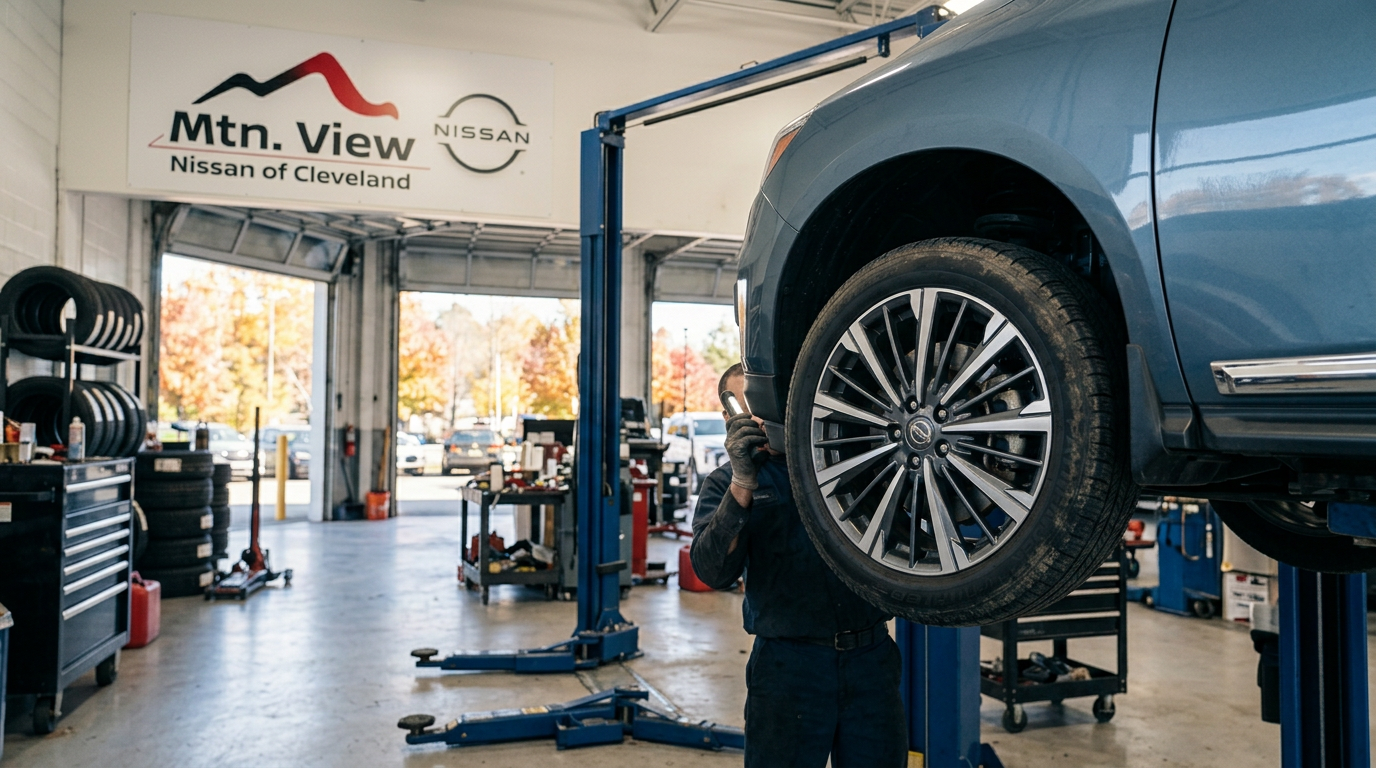
How Often Should You Service Nissan Pathfinder Brakes?

Nissan Pathfinder brakes require a routine safety inspection every 5,000 to 7,500 miles, which aligns conveniently with standard synthetic oil changes and tire rotations. Under typical driving conditions, friction pads on a family crossover last between 30,000 and 70,000 miles, while brake rotors generally require resurfacing or replacement between 50,000 and 70,000 miles. Frequent stop-and-go driving, heavy towing, and navigating the rolling hills around Cleveland accelerate component wear and necessitate earlier service intervals. Maintaining an active inspection schedule prevents minor pad wear from escalating into severe rotor scoring or caliper damage. During a routine brake check, factory-trained technicians measure remaining friction material thickness, evaluate rotor surface condition, inspect hydraulic brake lines for leaks, and check brake fluid moisture content. Driver awareness plays an equally critical role in identifying maintenance needs between scheduled shop visits. Key warning indicators that signify immediate brake system attention include: High-pitched squealing or harsh metallic grinding sounds when applying the brake pedal A spongy, soft, or unusually low pedal feel during normal stopping maneuvers Steering wheel pulsation or vehicle vibration during high-speed deceleration Vehicle pulling to one side while braking Illumination of the dashboard brake warning light or anti-lock braking indicator Brake fluid also requires periodic maintenance to preserve hydraulic integrity. Nissan recommends flushing and replacing brake fluid every 20,000 to 30,000 miles or every two years. Over time, glycol-based brake fluid absorbs atmospheric moisture, which lowers its boiling point and can lead to internal corrosion within the hydraulic lines and master cylinder. To verify your maintenance schedule or discuss abnormal pedal feel, travelers can access our service center directions or speak directly with an advisor by giving us a quick call at (423) 790-3700. Table of Contents What Type of Braking System and Specs Does the Nissan Pathfinder Use? What Factors Cause Nissan Pathfinder Brake Pads to Wear Down Faster? How Does the Nissan Pathfinder Towing Capacity Impact Brakes and Trailer Brake Needs? What Automated Emergency Braking Safety Features Are Built into the Nissan Pathfinder? What Is the Breakdown Between Parts and Labor Costs for a Pathfinder Brake Job? Common Questions About Nissan Pathfinder Brake Care Schedule Certified Nissan Pathfinder Brake Maintenance What Type of Braking System and Specs Does the Nissan Pathfinder Use? The Nissan Pathfinder utilizes a heavy-duty four-wheel disc braking system designed to handle the thermal loads of a three-row crossover carrying up to eight passengers. Front braking force is generated by 13.78-inch ventilated disc rotors measuring 1.18 inches thick, matched with heavy-duty sliding calipers. The rear assembly features 12.99-inch ventilated disc rotors measuring 0.63 inches thick, ensuring stable brake distribution across both axles under full load conditions. Electronic control systems work alongside the physical hardware to optimize stopping control in varying road environments. Standard technical brake safety features include: Four-wheel, four-channel, four-sensor anti-lock braking system to prevent wheel lockup during hard stops Electronic brake-force distribution that automatically adjusts fluid pressure between front and rear axles based on vehicle weight cargo distribution Brake assist technology that detects emergency braking inputs and instantly delivers maximum hydraulic boost pressure The braking setup interfaces directly with the vehicle's powertrain. The 3.5-liter V6 engine delivers 284 horsepower and 259 lb-ft of torque (or 295 horsepower and 270 lb-ft in the Rock Creek trim) through a nine-speed automatic transmission. This gearing allows engine braking on steep downhill descents, reducing physical brake pedal usage and preventing thermal fade during long mountain drives. What Factors Cause Nissan Pathfinder Brake Pads to Wear Down Faster? Brake pads wear down faster when subjected to repeated thermal cycling, heavy vehicle payloads, stop-and-go commuter traffic, and continuous downhill mountain braking. Excess heat degrades the bonding resin within organic and metallic pad compounds, causing friction material to wear away rapidly. Our service team routinely observes several primary driver habits and operational environments that shorten brake pad lifespans: Aggressive Traffic Deceleration: Abrupt stopping at high speeds generates extreme surface friction, spiking rotor temperatures and accelerating pad erosion. Heavy Cargo and Passenger Loading: Carrying maximum passenger loads or hauling full cargo bays increases vehicle momentum, forcing the front calipers to work significantly harder to slow the vehicle down. Mountain Driving: Dragging the brake pedal during prolonged downhill descents causes sustained friction that can glaze pad surfaces and harden friction compounds. Riding the Brake Pedal: Resting a foot on the brake pedal while driving engages the pads lightly against the rotors, generating constant heat and premature surface drag. Environmental Exposure: Road grit, mud from unpaved trails, and standing water can enter the caliper assembly, leading to uneven pad wear or sticking slide pins. When brake pads wear below 3 millimeters in thickness, replacement becomes mandatory to prevent the metal backing plate from contacting the rotor face. Metal-to-metal contact causes severe rotor gouging, compromising stopping distances and significantly increasing overall repair expenses. How Does the Nissan Pathfinder Towing Capacity Impact Brakes and Trailer Brake Needs? Towing at or near the maximum towing capacity of 6,000 pounds dramatically increases kinetic energy, requiring significantly greater stopping distance and raising hydraulic fluid temperatures. Standard Pathfinder trims carry a base towing rating of 3,500 pounds, while Rock Creek, Platinum, and properly equipped models reach 6,000 pounds. Operating a heavy trailer without auxiliary trailer braking forces the vehicle's primary discs to absorb the entire momentum of both the crossover and the towed load. This friction overload leads to brake fade, a condition where overheated pads lose friction grip against the rotors. To maintain towing safety and protect hydraulic components, owner requirements and best practices include: Installing an independent electronic or surge trailer brake system for any towed load exceeding 1,500 pounds Equipping an OEM-grade wiring harness and a dash-mounted trailer brake controller to synchronize vehicle and trailer brake timing Utilizing the transmission's manual shift mode or Tow/Haul setting on steep downgrades to leverage engine braking Increasing follow distance by double or triple normal vehicle spacing when pulling heavy equipment, campers, or watercraft When trailering frequently, scheduling mid-season brake inspections helps catch heat-related rotor glazing or pad crystallization before severe component degradation occurs. What Automated Emergency Braking Safety Features Are Built into the Nissan Pathfinder? Active collision-mitigation features come standard on every Nissan Pathfinder via Nissan Safety Shield 360, offering automated driver assistance during critical stopping situations. The system combines forward-facing radar and camera sensors to monitor surrounding traffic and apply hydraulic braking pressure when collision threats are detected. Key automated braking systems built into the vehicle architecture include: Automatic Emergency Braking with Pedestrian Detection: Scans the road ahead for vehicles and pedestrians, providing visual and audible alerts before automatically applying partial or full stopping force if the driver fails to react. Rear Automatic Braking: Monitors the area directly behind the vehicle while reversing at low speeds, automatically engaging the brakes if static obstacles or approaching objects are detected. These advanced safety technologies contributed to earning the IIHS TOP SAFETY PICK+ award and a five-star overall NHTSA safety rating for evaluated configurations. However, automated emergency braking systems rely entirely on functional physical hardware. Worn pads, glazed rotors, or air in the hydraulic lines compromise system response times, making mechanical brake maintenance vital to safety feature performance. What Is the Breakdown Between Parts and Labor Costs for a Pathfinder Brake Job? A standard Pathfinder brake service invoice splits between factory-spec replacement parts and certified technician labor. Genuine OEM brake pad sets generally range from $80 to $150 per axle, while replacement rotors average between $100 and $200 per wheel depending on rotor diameter and cooling design. Professional labor costs typically range between $120 and $250 per axle. Labor fees cover comprehensive installation procedures that go well beyond basic pad swapping: Precise measurement of rotor thickness and runout using digital micrometers Complete cleaning and lubrication of caliper slide pins, hardware clips, and contact points System hydraulic inspection and brake fluid top-off Electronic parking brake retraction and calibration resets Post-installation road testing to bed in new pads and verify stopping stability Choosing original equipment components ensures proper noise damping shims, exact pad friction formulations, and factory heat dissipation standards. Sourcing factory components through our Nissan parts department guarantees precise fitment designed specifically for your vehicle's weight rating. Common Questions About Nissan Pathfinder Brake Care Q: How can you tell if Nissan Pathfinder brake rotors are warped? An indicator of warped brake rotors is a noticeable vibration or pulsing sensation felt through the brake pedal or steering wheel during deceleration. Warping occurs when rotors suffer thermal shock or localized friction overheating, causing microscopic variations across the rotor surface. Technicians measure these surface variations using a dial indicator to determine whether resurfacing on a brake lathe or complete rotor replacement is necessary. Q: Do independent auto repair shops have the tools to service Pathfinder electronic parking brakes? While many independent shops possess general diagnostic scan tools, servicing modern electronic parking brakes requires specific diagnostic software to place the rear calipers into service mode safely. Certified dealership technicians use factory software that safely retracts the electronic actuators without damaging the delicate motorized assembly, ensuring precise rear brake calibration. Q: How long does a full four-wheel brake pad and rotor replacement take? A complete four-wheel brake pad and rotor replacement typically takes between two and three hours in a professional service facility. This time frame allows technicians to replace pads, install new rotors, service caliper hardware, perform a hydraulic fluid inspection, reset onboard maintenance monitors, and complete a real-world road test. Q: What type of brake fluid does the Nissan Pathfinder require? The 2026 Nissan Pathfinder uses standard Genuine Nissan Super Heavy Duty Brake Fluid or an equivalent DOT 3 brake fluid formulation. Using non-approved fluid grades can damage internal rubber seals within the master cylinder and anti-lock braking system hydraulic unit, leading to system leaks or degraded stopping performance. Q: Will aftermarket brake pads affect my vehicle's braking safety systems? Generic aftermarket brake pads may not match the exact friction coefficients or noise-damping properties engineered into factory pads. Mismatched friction levels can alter brake pedal effort and compromise the precise stopping distances calculated by Nissan Safety Shield 360 and anti-lock braking control modules. Schedule Certified Nissan Pathfinder Brake Maintenance Keeping your braking system serviced with original equipment pads and rotors maintains optimal stopping control and protects your vehicle's safety features. Professional care ensures your three-row crossover remains safe for daily commutes, mountain drives, and heavy towing duties. Located nearby in McDonald, our dedicated service center provides factory-trained technicians, specialized diagnostic equipment, and genuine OEM components tailored precisely to your model. Whether you need a routine multi-point brake inspection, fluid flush, or complete pad and rotor replacement, our team delivers complete ownership care. To set up your next service visit, you can schedule a service appointment online, review our service facility address on Pleasant Grove Road, or give our service department a quick call at (423) 790-3700 today. © 2026 Mtn View Nissan of Cleveland. All rights reserved.

What are the factory tire specifications for the 2026 Nissan Frontier?

What are the factory tire specifications for the 2026 Nissan Frontier?

Factory tire specifications for the 2026 Nissan Frontier in Cleveland center on a baseline size of P265/65R17 mounted on 17x7.5-inch alloy wheels for the standard Frontier SV trim, delivering an overall diameter of about 31 inches. Across the lineup, OEM wheel fitments range from 265/70R16 on 16-inch wheels for the Frontier S to 265/70R17 all-terrain tires on the Frontier PRO-4X and 265/60R18 on the Frontier SL. All trims share a 6x114.3 mm six-lug bolt pattern and a 66.1 mm center bore, accommodating a matching full-size underbody spare tire. Evaluating factory wheel and tire specifications ensures your midsize truck maintains proper drivetrain calibration, suspension geometry, and braking performance. Nissan engineers designed the third-generation chassis to maintain a consistent overall outer rolling diameter of roughly 31 inches across most standard trim levels. This uniform sizing allows owners to select replacement tires or move between OEM wheel diameters without disrupting electronic control systems. Understanding these technical dimensions is essential when selecting replacement rubber for daily driving or regional utility. The Frontier S base model rides on 265/70R16 tires with 16 by 7-inch wheels, offering a taller sidewall that absorbs surface impacts on uneven pavement. Upgrading to the Frontier SV or Frontier SL introduces 17-inch and 18-inch aluminum alloy wheels, which shorten the sidewall profile to enhance steering response during highway travel. Truck owners driving near the Appalachian Ridge-and-Valley terrain surrounding Cleveland rely on precise tire specs to maintain stability on mountain grade changes and river basin access roads. Maintaining correct load indices and speed ratings preserves the truck's standard 1,310-pound payload capacity and structural towing capabilities. If you need assistance verifying your truck's original door-jamb tire placard, you can visit our service center location at 131 Pleasant Grove Rd or call our team directly at (423) 790-3700 to review approved OEM fitments. Table of Contents What is the standard factory tire size for a Nissan Frontier SV baseline? How do PRO-4X all-terrain tires compare to standard Frontier SV fitments? How do TPMS monitoring and alignment service keep your Frontier tires lasting longer? Why choose certified Nissan tire service and OEM maintenance in Cleveland? Frequently asked questions about Nissan Frontier tire replacements and care Schedule your Nissan Frontier tire service at Mtn View Nissan What is the standard factory tire size for a Nissan Frontier SV baseline? The baseline factory tire size for the Nissan Frontier SV trim is P265/65R17 paired with 17 by 7.5-inch aluminum alloy wheels. This specification produces an overall rolling diameter of approximately 31 inches and a section width of 10.4 inches, establishing a balanced foundation for highway fuel economy, wet-weather traction, and light off-pavement performance. Using the Frontier SV fitment as a reference baseline simplifies your search when comparing replacement all-season or all-terrain tires. The original equipment all-season tread pattern features multi-pitch tread blocks and circumferential grooves designed to channel water away from the contact patch, maintaining quiet cabin operation and predictable braking. Because the P265/65R17 size is widely produced by major tire manufacturers, owners have access to a broad selection of tread compounds ranging from highway-terrain comfort tires to rugged outer-shoulder all-terrain options. Maintaining the factory baseline size preserves accurate speedometer readings and proper shift timing from the 9-speed automatic transmission. When fitted with the standard 3.8L V6 engine generating 310 hp and 281 lb-ft, the factory wheel diameter keeps engine revolutions within the optimal power band during acceleration. Deviating significantly from this 31-inch outer diameter can alter final drive gearing behavior, affecting both low-end towing responsiveness and highway efficiency. When truck owners ask our service advisors about setting a baseline for replacement tires, we point directly to the SV trim's standard setup to verify whether they need highway efficiency or off-road traction. The standard 17-inch wheel profile leaves ample clearance inside the front fender wells during full steering lock, eliminating concerns about inner liner rubbing during tight maneuvers. Additionally, the standard steel spare wheel mounted beneath the truck bed carries a full-size matching P265/65R17 tire, ensuring emergency roadside tire swaps do not strain the 4WD transfer case or rear differential. How do PRO-4X all-terrain tires compare to standard Frontier SV fitments? The Nissan Frontier PRO-4X comes equipped from the factory with 265/70R17 all-terrain tires that increase overall rolling diameter to roughly 32 inches, adding roughly an inch of height compared to the standard Frontier SV baseline. This upsized fitment provides aggressive shoulder lugs, deeper tread channels, and reinforced sidewalls designed to resist punctures on rocky surfaces and unpaved trails. Comparing the two trim fitments highlights distinct engineering goals for highway comfort versus off-road utility. While the Frontier SV utilizes a highway-focused P265/65R17 all-season pattern aimed at smooth pavement operation and quiet cruising, the Frontier PRO-4X leverages its taller 265/70R17 tire package to elevate ground clearance to 7.7 inches at the skid plates. The extra sidewall height on the 17-inch rim allows the tire to flex over obstacles, absorbing sharp trail impacts before they reach the suspension components. Feature / Spec Nissan Frontier SV Baseline Nissan Frontier PRO-4X Standard Tire Size P265/65R17 265/70R17 Tire Type All-Season Highway All-Terrain Wheel Dimensions 17 x 7.5-inch Alloy 17 x 7.5-inch Alloy Overall Tire Diameter Approx. 31 inches Approx. 32 inches Tread Design Quiet circumferential grooves Open shoulder blocks & mud notches Bolt Pattern 6x114.3 mm 6x114.3 mm Drivers exploring outdoor recreation spots near Cherokee National Forest or towing gear toward the Ocoee River benefit from the enhanced traction of the all-terrain tread pattern. The open tread shoulder blocks clear loose soil and mud quickly, preventing tread packing during off-road excursions around Cleveland. However, all-terrain tires naturally exhibit slightly higher rolling resistance and increased cabin humming on smooth asphalt compared to standard all-season rubber. Fitting 265/70R17 tires onto a non-PRO-4X trim requires verifying front wheel well clearances. The Frontier PRO-4X features factory Bilstein off-road performance shocks and specific fender geometry tailored for the larger tire footprint. While a standard Frontier SV can typically accommodate the 265/70R17 outer size without structural modifications, wheel offset and mud flap placement must be checked during installation to prevent tire rubbing under full suspension compression. How do TPMS monitoring and alignment service keep your Frontier tires lasting longer? Routine four-wheel alignment checks and Tire Pressure Monitoring System calibration prevent premature tread wear and preserve straight-line tracking under heavy payloads. Midsize trucks using double-wishbone front suspension and a solid rear axle rely on precise toe, camber, and caster angles to ensure even weight distribution across the entire tire contact patch. Improper wheel alignment rapidly accelerates tire degradation, manifesting as feathered edges or diagonal wear patterns across the tread face. When toe angles drift out of factory specification, the tires continuously scrub against the road surface rather than rolling freely. This scrubbing action increases rolling resistance, reduces fuel efficiency, and can cause the vehicle to pull toward the shoulder during highway driving. Scheduling an alignment inspection every 12,000 miles—or after navigating harsh terrain and potholed roads—restores factory handling performance. Tire Maintenance Checklist for Nissan Frontier: - Check cold tire inflation pressures monthly using a calibrated digital gauge - Rotate tires every 5,000 to 7,500 miles (matching oil service intervals) - Inspect tread depth across inner, center, and outer grooves for uneven wear - Re-balance wheel assembly if high-speed steering wheel vibration occurs - Perform TPMS relearn procedure after rotation or sensor replacement Your truck's factory Tire Pressure Monitoring System utilizes wireless sensors mounted inside each wheel to transmit real-time pressure data to the instrument cluster. Seasonal temperature fluctuations cause ambient air pressure inside the tire to drop roughly 1 PSI for every 10-degree drop in outside temperature. Maintaining correct inflation pressures prevents outer shoulder wear, reduces internal heat buildup, and ensures safety features like Automatic Emergency Braking function with optimal tire grip. Rotating your tires every 5,000 to 7,500 miles ensures all four positions wear at an equal rate. On four-wheel-drive models, front tires experience distinct steering and cornering forces compared to the rear drive axle. A standard cross-forward or rearward-cross rotation pattern evens out tread depth differences, allowing you to replace your tires as a complete set of four. When replacing sensors or changing wheel sizes, technicians perform a electronic TPMS relearn to ensure the dashboard warning system accurately identifies each wheel position. Why choose certified Nissan tire service and OEM maintenance in Cleveland? Factory-certified service provides your truck with specialized diagnostics, master-trained technicians, and genuine OEM parts designed specifically for the third-generation platform. Servicing your truck with authorized technicians ensures that tire installations, suspension repairs, and sensor recalibrations adhere strictly to Nissan engineering specifications. Our service department utilizes advanced computerized tire mounting and dynamic high-speed wheel balancing machinery to prevent vibration. When installing new tires, technicians inspect suspension ball joints, tie rod ends, and shock absorbers to catch mechanical wear before it damages your fresh rubber. Furthermore, major safety recognitions—including the model's 4-star overall safety rating from NHTSA —are supported by maintaining original tire traction characteristics and proper brake system operation. Commuters managing daily drives between manufacturing centers and residential neighborhoods around Cleveland count on reliable maintenance to protect their vehicle investment. J.D. Power assigned the midsize truck platform a predicted reliability score of 84 out of 100, demonstrating the durability of its mechanical components when supported by regular upkeep. Every tire service includes a multi-point inspection covering brake pad thickness, fluid levels, belt condition, and underbody protection components. Should you encounter a flat tire or road hazard away from home, Nissan Roadside Assistance provides coverage for 36 months or 36,000 miles under the factory warranty package. You can reach emergency support directly through Nissan Roadside Assistance at 1-800-225-2476 or contact our dealership for local service coordination. To maintain optimal tread performance and prolong the life of your tires, you can easily schedule a service appointment through our online portal. Frequently asked questions about Nissan Frontier tire replacements and care Q: Can I install 265/70R17 tires on a standard Frontier SV without a lift kit? Installing 265/70R17 tires on a standard Frontier SV is a common upgrade that generally fits within the stock wheel wells without requiring a suspension lift. Because this size increases overall tire diameter by roughly one inch over the factory P265/65R17 baseline, front mud flap clearance should be verified at full steering lock to prevent light rubbing during tight turns or off-road articulation. Q: How does changing tire size affect the Frontier speedometer and TPMS calibration? Increasing your tire size alters the distance traveled per wheel revolution, causing your speedometer to read slightly slower than your actual road speed. A jump from a 31-inch standard tire to a 32-inch all-terrain tire results in roughly a 2% to 3% speedometer variance. The factory Tire Pressure Monitoring System continues to monitor pressure accurately regardless of tire height, though sensor IDs must be reset if new wheels are installed. Q: What is the recommended tire rotation pattern for a four-wheel-drive Nissan Frontier? For part-time four-wheel-drive trucks, a rearward-cross or modified X-pattern tire rotation is recommended every 5,000 to 7,500 miles. Moving the front tires straight to the rear axle while crossing the rear tires to opposite front positions distributes cornering and drive torque wear evenly across all four tires. If you include a matching full-size spare in the rotation, follow a 5-tire rotation sequence to maximize overall tread life. Q: Does changing factory tire sizes impact towing performance or payload capacity? Fitting heavier, unapproved tire sizes can negatively affect towing performance and effective braking distance. Installing larger or heavier Light Truck (LT-metric) tires increases rotational mass and un-sprung weight, which can make the engine work harder when starting with a trailer. Always ensure replacement tires match or exceed the factory load index rating specified on your truck's driver-side door pillar placard. Q: How often should I check the pressure on the underbody full-size spare tire? You should inspect your underbody spare tire pressure at least twice a year or during every oil change service. Because the spare tire is stored under the truck bed exposed to road spray and temperature changes, it can slowly lose pressure over time. Maintaining the spare at the factory recommended cold inflation pressure ensures it is ready for immediate deployment during a roadside emergency. If you need replacement sensors or spare tire hardware, our parts department supplies genuine OEM components designed for your exact trim. Schedule your Nissan Frontier tire service at Mtn View Nissan Maintaining proper tire selection, correct inflation pressures, and routine wheel alignments is the most effective way to protect your truck's ride quality, fuel economy, and safety performance. Whether your Frontier SV requires a fresh set of factory-spec P265/65R17 all-season tires or your Frontier PRO-4X needs rugged all-terrain replacements for weekend trail adventures, using OEM-approved fitments ensures your midsize truck operates as designed. Our certified service team provides complete tire support for the 2026 Frontier in Cleveland, including precision balancing, four-wheel alignment corrections, TPMS sensor diagnostics, and genuine Nissan replacement tires backed by factory warranties. We invite you to visit our state-of-the-art facility for a comprehensive tire inspection and tread depth analysis. To set up your next maintenance visit, drop by our service center located at 131 Pleasant Grove Rd or give our service department a call directly at (423) 790-3700 today. © 2026 Mtn View Nissan of Cleveland. All rights reserved.