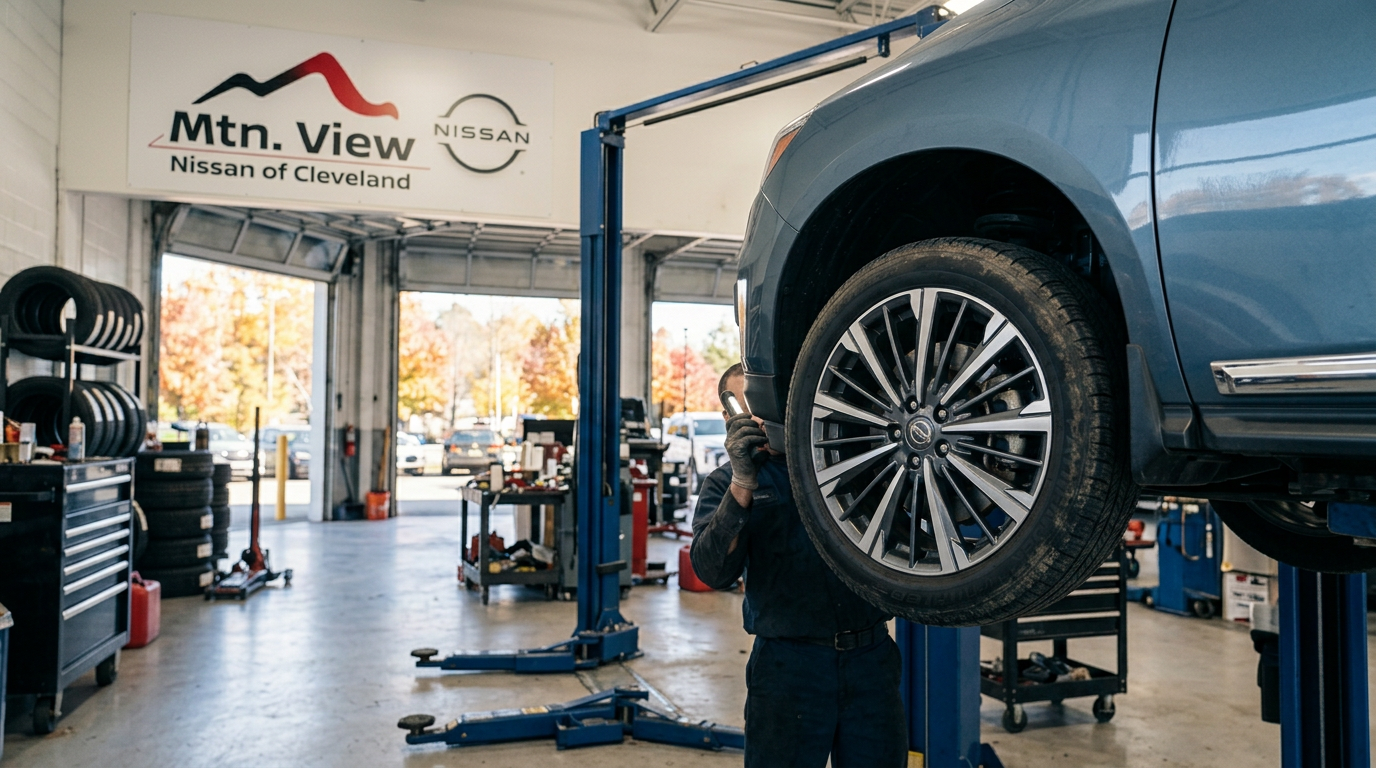

Nissan Pathfinder brakes require a routine safety inspection every 5,000 to 7,500 miles, which aligns conveniently with standard synthetic oil changes and tire rotations. Under typical driving conditions, friction pads on a family crossover last between 30,000 and 70,000 miles, while brake rotors generally require resurfacing or replacement between 50,000 and 70,000 miles. Frequent stop-and-go driving, heavy towing, and navigating the rolling hills around Cleveland accelerate component wear and necessitate earlier service intervals. Maintaining an active inspection schedule prevents minor pad wear from escalating into severe rotor scoring or caliper damage. During a routine brake check, factory-trained technicians measure remaining friction material thickness, evaluate rotor surface condition, inspect hydraulic brake lines for leaks, and check brake fluid moisture content. Driver awareness plays an equally critical role in identifying maintenance needs between scheduled shop visits. Key warning indicators that signify immediate brake system attention include: High-pitched squealing or harsh metallic grinding sounds when applying the brake pedal A spongy, soft, or unusually low pedal feel during normal stopping maneuvers Steering wheel pulsation or vehicle vibration during high-speed deceleration Vehicle pulling to one side while braking Illumination of the dashboard brake warning light or anti-lock braking indicator Brake fluid also requires periodic maintenance to preserve hydraulic integrity. Nissan recommends flushing and replacing brake fluid every 20,000 to 30,000 miles or every two years. Over time, glycol-based brake fluid absorbs atmospheric moisture, which lowers its boiling point and can lead to internal corrosion within the hydraulic lines and master cylinder. To verify your maintenance schedule or discuss abnormal pedal feel, travelers can access our service center directions or speak directly with an advisor by giving us a quick call at (423) 790-3700. Table of Contents What Type of Braking System and Specs Does the Nissan Pathfinder Use? What Factors Cause Nissan Pathfinder Brake Pads to Wear Down Faster? How Does the Nissan Pathfinder Towing Capacity Impact Brakes and Trailer Brake Needs? What Automated Emergency Braking Safety Features Are Built into the Nissan Pathfinder? What Is the Breakdown Between Parts and Labor Costs for a Pathfinder Brake Job? Common Questions About Nissan Pathfinder Brake Care Schedule Certified Nissan Pathfinder Brake Maintenance What Type of Braking System and Specs Does the Nissan Pathfinder Use? The Nissan Pathfinder utilizes a heavy-duty four-wheel disc braking system designed to handle the thermal loads of a three-row crossover carrying up to eight passengers. Front braking force is generated by 13.78-inch ventilated disc rotors measuring 1.18 inches thick, matched with heavy-duty sliding calipers. The rear assembly features 12.99-inch ventilated disc rotors measuring 0.63 inches thick, ensuring stable brake distribution across both axles under full load conditions. Electronic control systems work alongside the physical hardware to optimize stopping control in varying road environments. Standard technical brake safety features include: Four-wheel, four-channel, four-sensor anti-lock braking system to prevent wheel lockup during hard stops Electronic brake-force distribution that automatically adjusts fluid pressure between front and rear axles based on vehicle weight cargo distribution Brake assist technology that detects emergency braking inputs and instantly delivers maximum hydraulic boost pressure The braking setup interfaces directly with the vehicle's powertrain. The 3.5-liter V6 engine delivers 284 horsepower and 259 lb-ft of torque (or 295 horsepower and 270 lb-ft in the Rock Creek trim) through a nine-speed automatic transmission. This gearing allows engine braking on steep downhill descents, reducing physical brake pedal usage and preventing thermal fade during long mountain drives. What Factors Cause Nissan Pathfinder Brake Pads to Wear Down Faster? Brake pads wear down faster when subjected to repeated thermal cycling, heavy vehicle payloads, stop-and-go commuter traffic, and continuous downhill mountain braking. Excess heat degrades the bonding resin within organic and metallic pad compounds, causing friction material to wear away rapidly. Our service team routinely observes several primary driver habits and operational environments that shorten brake pad lifespans: Aggressive Traffic Deceleration: Abrupt stopping at high speeds generates extreme surface friction, spiking rotor temperatures and accelerating pad erosion. Heavy Cargo and Passenger Loading: Carrying maximum passenger loads or hauling full cargo bays increases vehicle momentum, forcing the front calipers to work significantly harder to slow the vehicle down. Mountain Driving: Dragging the brake pedal during prolonged downhill descents causes sustained friction that can glaze pad surfaces and harden friction compounds. Riding the Brake Pedal: Resting a foot on the brake pedal while driving engages the pads lightly against the rotors, generating constant heat and premature surface drag. Environmental Exposure: Road grit, mud from unpaved trails, and standing water can enter the caliper assembly, leading to uneven pad wear or sticking slide pins. When brake pads wear below 3 millimeters in thickness, replacement becomes mandatory to prevent the metal backing plate from contacting the rotor face. Metal-to-metal contact causes severe rotor gouging, compromising stopping distances and significantly increasing overall repair expenses. How Does the Nissan Pathfinder Towing Capacity Impact Brakes and Trailer Brake Needs? Towing at or near the maximum towing capacity of 6,000 pounds dramatically increases kinetic energy, requiring significantly greater stopping distance and raising hydraulic fluid temperatures. Standard Pathfinder trims carry a base towing rating of 3,500 pounds, while Rock Creek, Platinum, and properly equipped models reach 6,000 pounds. Operating a heavy trailer without auxiliary trailer braking forces the vehicle's primary discs to absorb the entire momentum of both the crossover and the towed load. This friction overload leads to brake fade, a condition where overheated pads lose friction grip against the rotors. To maintain towing safety and protect hydraulic components, owner requirements and best practices include: Installing an independent electronic or surge trailer brake system for any towed load exceeding 1,500 pounds Equipping an OEM-grade wiring harness and a dash-mounted trailer brake controller to synchronize vehicle and trailer brake timing Utilizing the transmission's manual shift mode or Tow/Haul setting on steep downgrades to leverage engine braking Increasing follow distance by double or triple normal vehicle spacing when pulling heavy equipment, campers, or watercraft When trailering frequently, scheduling mid-season brake inspections helps catch heat-related rotor glazing or pad crystallization before severe component degradation occurs. What Automated Emergency Braking Safety Features Are Built into the Nissan Pathfinder? Active collision-mitigation features come standard on every Nissan Pathfinder via Nissan Safety Shield 360, offering automated driver assistance during critical stopping situations. The system combines forward-facing radar and camera sensors to monitor surrounding traffic and apply hydraulic braking pressure when collision threats are detected. Key automated braking systems built into the vehicle architecture include: Automatic Emergency Braking with Pedestrian Detection: Scans the road ahead for vehicles and pedestrians, providing visual and audible alerts before automatically applying partial or full stopping force if the driver fails to react. Rear Automatic Braking: Monitors the area directly behind the vehicle while reversing at low speeds, automatically engaging the brakes if static obstacles or approaching objects are detected. These advanced safety technologies contributed to earning the IIHS TOP SAFETY PICK+ award and a five-star overall NHTSA safety rating for evaluated configurations. However, automated emergency braking systems rely entirely on functional physical hardware. Worn pads, glazed rotors, or air in the hydraulic lines compromise system response times, making mechanical brake maintenance vital to safety feature performance. What Is the Breakdown Between Parts and Labor Costs for a Pathfinder Brake Job? A standard Pathfinder brake service invoice splits between factory-spec replacement parts and certified technician labor. Genuine OEM brake pad sets generally range from $80 to $150 per axle, while replacement rotors average between $100 and $200 per wheel depending on rotor diameter and cooling design. Professional labor costs typically range between $120 and $250 per axle. Labor fees cover comprehensive installation procedures that go well beyond basic pad swapping: Precise measurement of rotor thickness and runout using digital micrometers Complete cleaning and lubrication of caliper slide pins, hardware clips, and contact points System hydraulic inspection and brake fluid top-off Electronic parking brake retraction and calibration resets Post-installation road testing to bed in new pads and verify stopping stability Choosing original equipment components ensures proper noise damping shims, exact pad friction formulations, and factory heat dissipation standards. Sourcing factory components through our Nissan parts department guarantees precise fitment designed specifically for your vehicle's weight rating. Common Questions About Nissan Pathfinder Brake Care Q: How can you tell if Nissan Pathfinder brake rotors are warped? An indicator of warped brake rotors is a noticeable vibration or pulsing sensation felt through the brake pedal or steering wheel during deceleration. Warping occurs when rotors suffer thermal shock or localized friction overheating, causing microscopic variations across the rotor surface. Technicians measure these surface variations using a dial indicator to determine whether resurfacing on a brake lathe or complete rotor replacement is necessary. Q: Do independent auto repair shops have the tools to service Pathfinder electronic parking brakes? While many independent shops possess general diagnostic scan tools, servicing modern electronic parking brakes requires specific diagnostic software to place the rear calipers into service mode safely. Certified dealership technicians use factory software that safely retracts the electronic actuators without damaging the delicate motorized assembly, ensuring precise rear brake calibration. Q: How long does a full four-wheel brake pad and rotor replacement take? A complete four-wheel brake pad and rotor replacement typically takes between two and three hours in a professional service facility. This time frame allows technicians to replace pads, install new rotors, service caliper hardware, perform a hydraulic fluid inspection, reset onboard maintenance monitors, and complete a real-world road test. Q: What type of brake fluid does the Nissan Pathfinder require? The 2026 Nissan Pathfinder uses standard Genuine Nissan Super Heavy Duty Brake Fluid or an equivalent DOT 3 brake fluid formulation. Using non-approved fluid grades can damage internal rubber seals within the master cylinder and anti-lock braking system hydraulic unit, leading to system leaks or degraded stopping performance. Q: Will aftermarket brake pads affect my vehicle's braking safety systems? Generic aftermarket brake pads may not match the exact friction coefficients or noise-damping properties engineered into factory pads. Mismatched friction levels can alter brake pedal effort and compromise the precise stopping distances calculated by Nissan Safety Shield 360 and anti-lock braking control modules. Schedule Certified Nissan Pathfinder Brake Maintenance Keeping your braking system serviced with original equipment pads and rotors maintains optimal stopping control and protects your vehicle's safety features. Professional care ensures your three-row crossover remains safe for daily commutes, mountain drives, and heavy towing duties. Located nearby in McDonald, our dedicated service center provides factory-trained technicians, specialized diagnostic equipment, and genuine OEM components tailored precisely to your model. Whether you need a routine multi-point brake inspection, fluid flush, or complete pad and rotor replacement, our team delivers complete ownership care. To set up your next service visit, you can schedule a service appointment online, review our service facility address on Pleasant Grove Road, or give our service department a quick call at (423) 790-3700 today. © 2026 Mtn View Nissan of Cleveland. All rights reserved.